

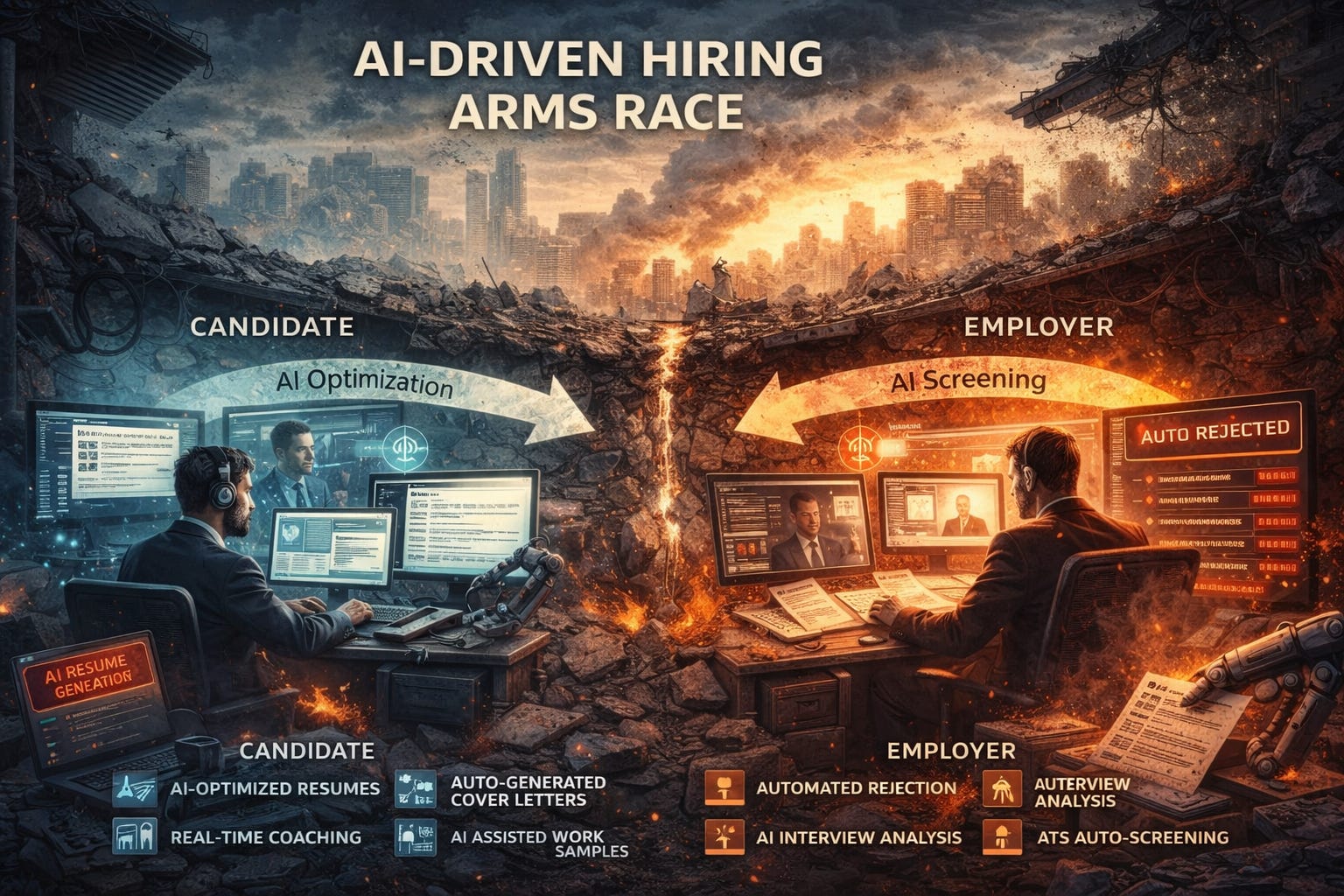
We are standing in the wreckage of the recruiting process while trying to pretend that what is happening is just an evolution. But AI, along with other factors, has wrought chaos.
What we are seeing is a classic technological arms race.
Candidates use AI to optimize applications. Employers deploy AI to detect or filter them. Candidates then refine their tools to evade those filters. Each cycle increases the game's sophistication while reducing the reliability of the signals produced.
Arms races rarely produce clarity. They produce escalation.
Here is where we are in 2026. Candidates are submitting AI-optimized resumes tailored to job descriptions in minutes. Cover letters are generated in seconds. Video interviews are being coached in real time by AI tools whispering answers through an earpiece. Work samples are assembled with AI assistance. And on the employer side, ATS systems are auto-rejecting candidates before a human ever looks at them, AI tools are scoring video interviews based on tone and word choice, and hiring managers are ghosting finalists who made it to the last round.
Hiring has always been an information problem.
Employers are trying to infer future performance from incomplete and imperfect signals: resumes, references, interviews, and credentials.
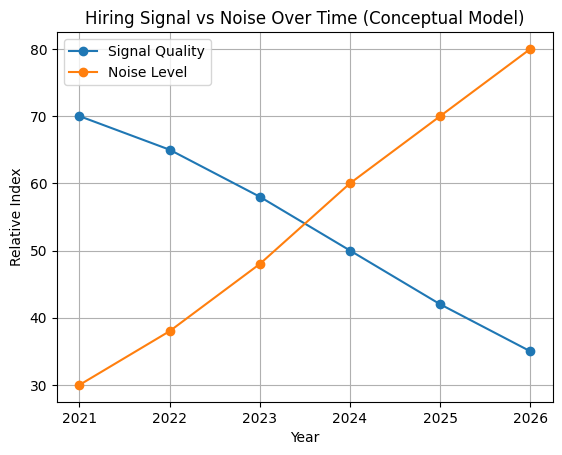
What AI has done is dramatically increase the noise in the system. Candidates can now generate signals that appear to demonstrate capability but are artifacts of software assistance. At the same time, employers have automated screening systems that amplify superficial indicators such as keywords or linguistic patterns.
The result is predictable: signal collapses, noise expands, and trust erodes
Both sides are gaming the other. Both sides know it. And the entire process has become a ritual that nobody believes in anymore.
So what does a recruiter do?
The Signal Problem
The honest answer is that most of what you receive in the top of the funnel is now close to useless as a measure of candidate quality. This is not the candidate’s fault. When you auto-reject someone for using the word “managed” instead of “led,” you trained them to stop being honest and start being strategic. You built the conditions for this. The resume they send you now is not a document about them. It is a document about what your ATS wants to see. Those are very different things.
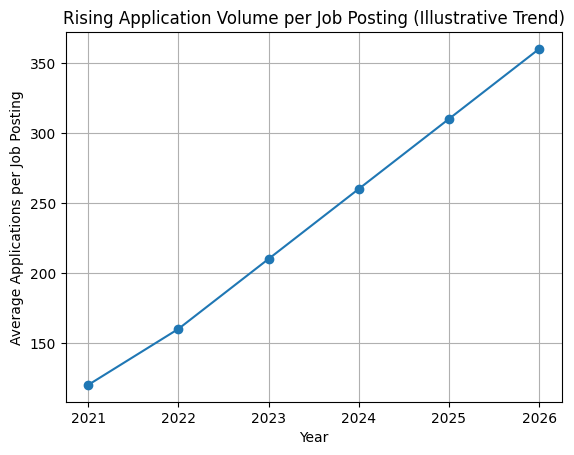
The numbers bear this out. In the past three years, total applications per role on LinkedIn have doubled. At the same time, 66% of recruiters say finding quality candidates has gotten harder. More volume, less signal. That is what an arms race looks like when it matures.
The video interview is not much better. A candidate coaching tool called Final Round AI, which provides real-time AI assistance during interviews, reportedly had 300,000 users within months of launching. When nearly a third of hiring managers say they have encountered fake voices or AI-scripted answers in interviews, you must ask what you are evaluating. You are no longer assessing the candidate. You are assessing how well they have prepared their AI to impersonate them.
Emerging Adaptations
Smart recruiters are shrinking the funnel, not expanding it.
Instead of processing
