

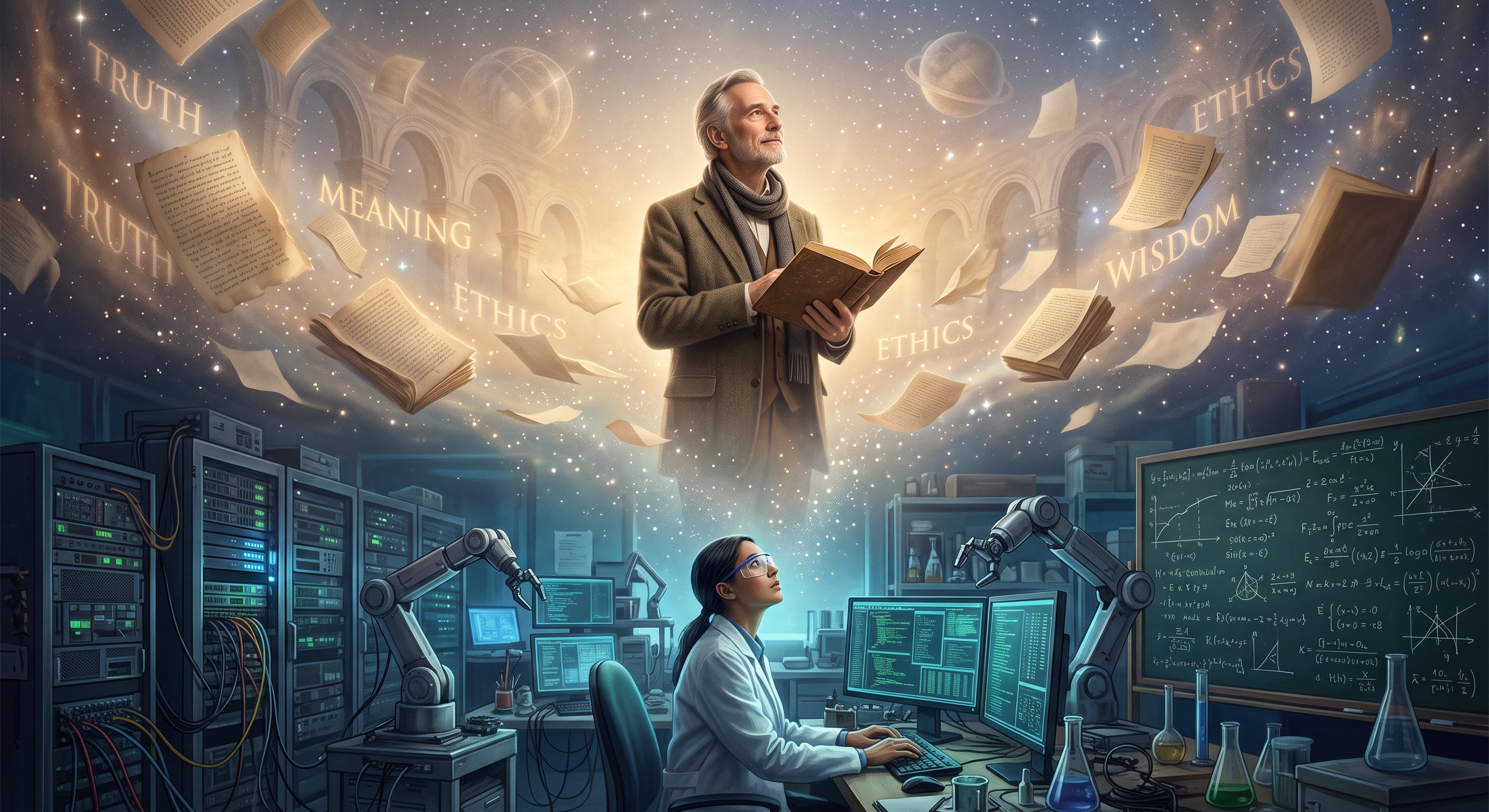
You should major in STEM. This is what we have been hearing for the past 25 years. Study computer science, engineering, mathematics, data science, or another technical field. That reasoning has held true for two decades, as technical skills have been scarce and employers are willing to pay a premium for them.
Today, the Bureau of Labor Statistics projects that STEM occupations will grow faster than non-STEM occupations. But anyone considering a STEM major might take a closer look at the numbers. Non-STEM occupations are projected to add 4.34 million jobs, compared with only 870,000 in STEM.
Artificial intelligence has changed the economics of knowledge work. It is reducing the cost of writing code, analyzing data, conducting research, translating languages, creating presentations, writing reports, and performing many other activities that previously required specialized technical or professional skills.
The new question we should be asking is not, " What should I study or learn that AI cannot do? Rather, we should be asking, " What can AI help me do better?
AI Is More Like Electricity Than a Profession
I hear people advocating that everyone should study AI. AI courses are popping up everywhere, and getting an AI certificate seems to be the new trend. There is no doubt that being AI-literate is important, but deep AI knowledge and skills are not necessary.
If you think of AI as something like electricity, you will understand. Most people do not need a degree in electrical engineering to use electricity. Electricity is infrastructure.
AI is also quickly becoming infrastructure. It will be embedded in almost everything we do. We will use it without thinking of ourselves as “using AI,” just as we rarely think about using electricity when we turn on a computer. To some degree, we already are doing this. If you drive any car made within the past five years, you are experiencing AI. It helps you stay in your lane, warns you when another car is beside you, and improves your gas mileage. Your GPS is guiding you to your destination. All of these use some form of AI.
There will certainly be a small group of people who should study machine learning, computer science, robotics, mathematics, and the underlying technologies of artificial intelligence. We need people who build the infrastructure. But for everyone else, getting a degree in AI may eventually seem a little like getting a degree in Excel or Microsoft Word. Knowing how to use these technologies is extremely useful. But the tool is not necessarily the subject worth spending four years studying.
The future economy needs technical expertise. But it also needs people who can determine what problems should be solved, evaluate competing explanations, understand human motivation, exercise judgment, recognize ethical problems, communicate complex ideas, and operate in situations where there is no objectively correct answer.
That’s where the liberal arts come in.
